Gota Canal - part of the system of canals crossing sweden from coast to coast
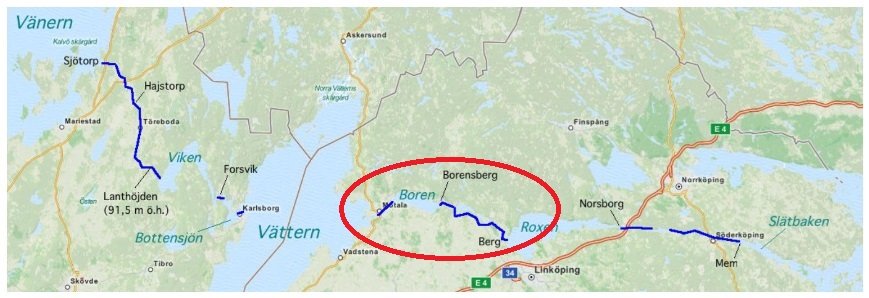
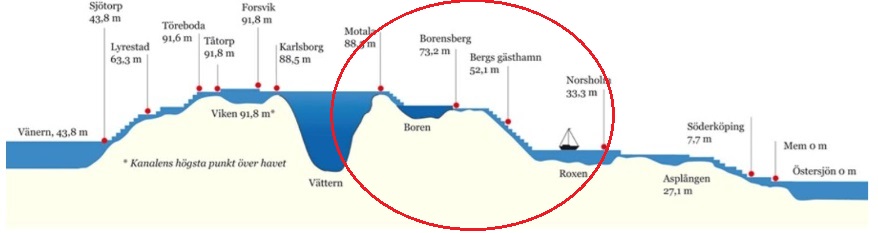
This shows the highest and lowest points of the Gota Canal (red circle)
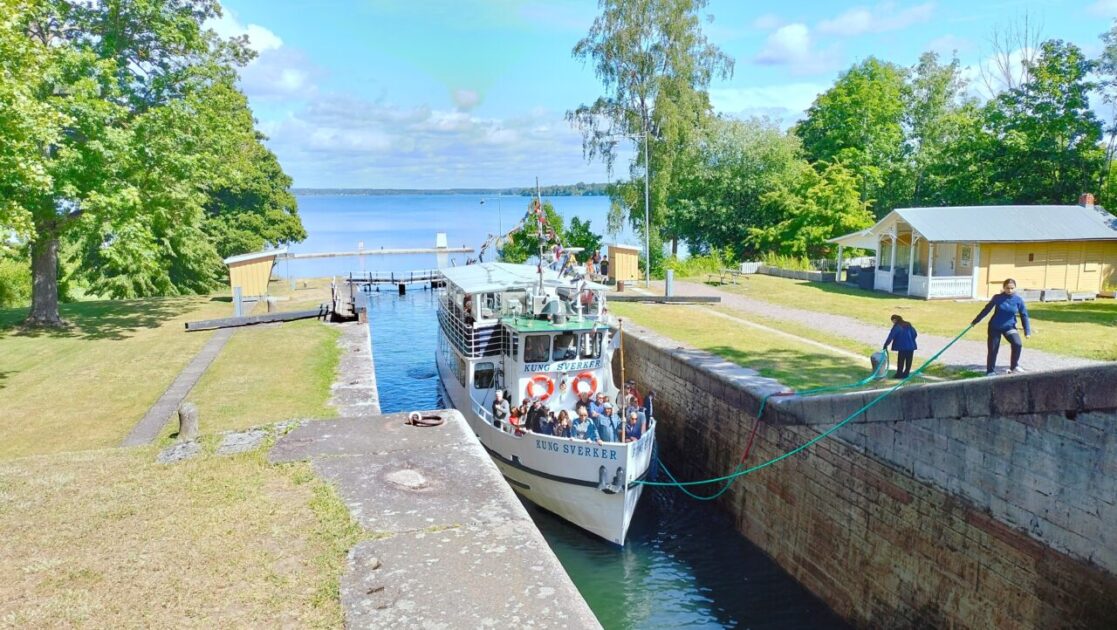
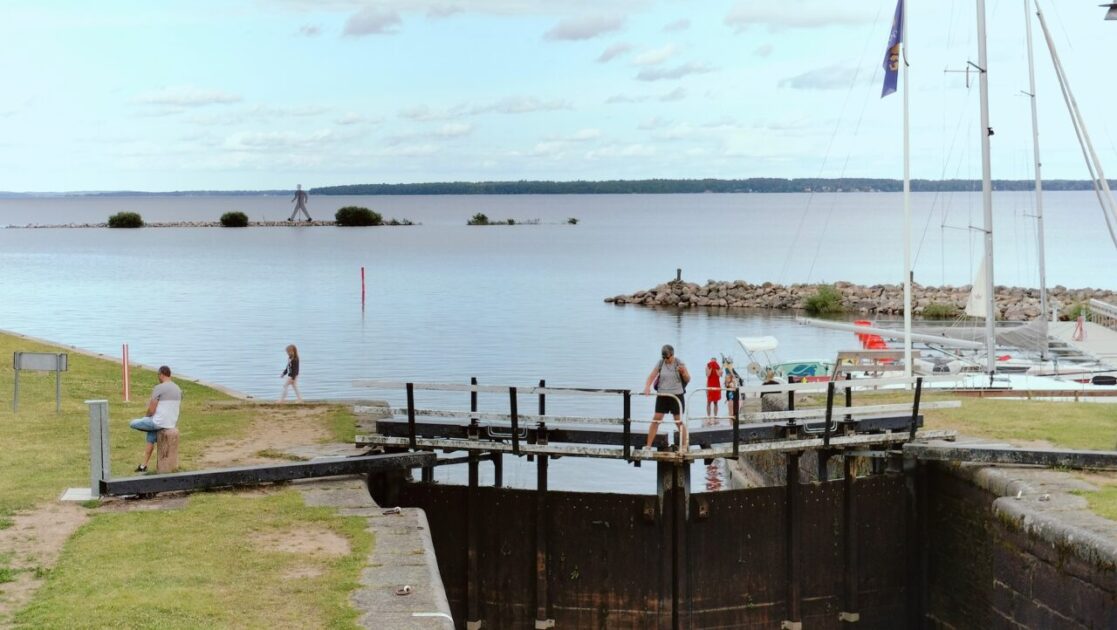
We spent most of the day discovering the Gota Canal from Lake Vattern, Motala to Lake Roxen, Berg; 22 locks and 17 bridges. The Gota Canal was inaugurated in 1822 and is an incredible piece of engineering with 58 locks in total. It is part of a waterway that stretches from Gothenburg on the west coast of Sweden to Soderkoping on the Baltic Sea. The Gota Canal starts at Sjotorp where it continues on from the Trollhatte Canal.
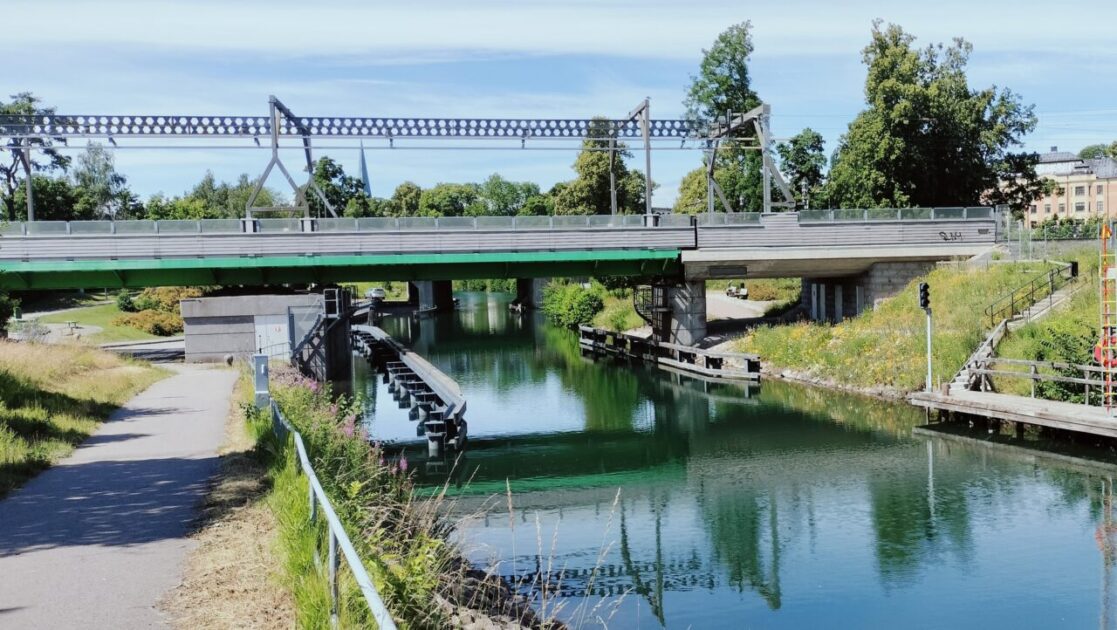
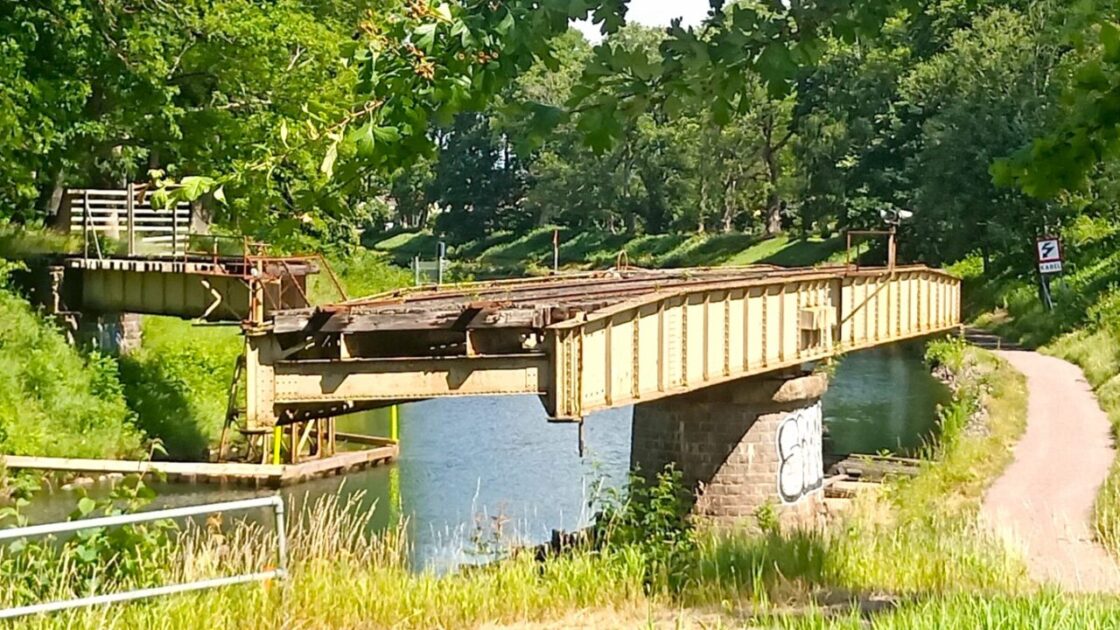
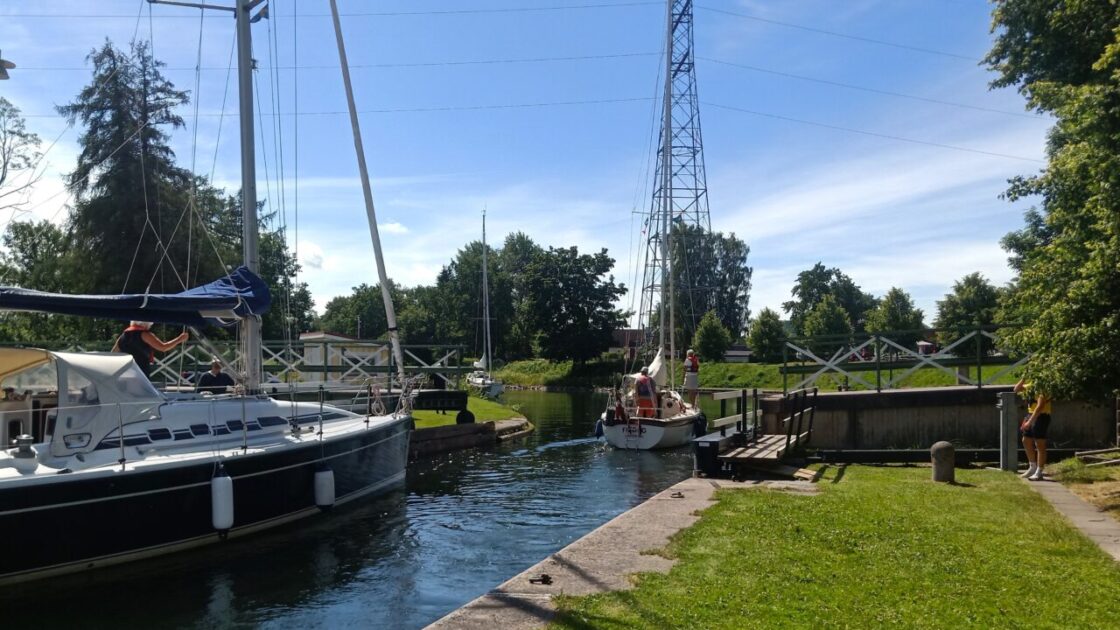
At Motala there are three bridges – the car bridge tilts up at one end, the rail bridge swivels in the middle (the electric train lines disconnect) and the other bridge is the defunct rail bridge which looked like it once swiveled.
The bottom lock in this flight of five locks
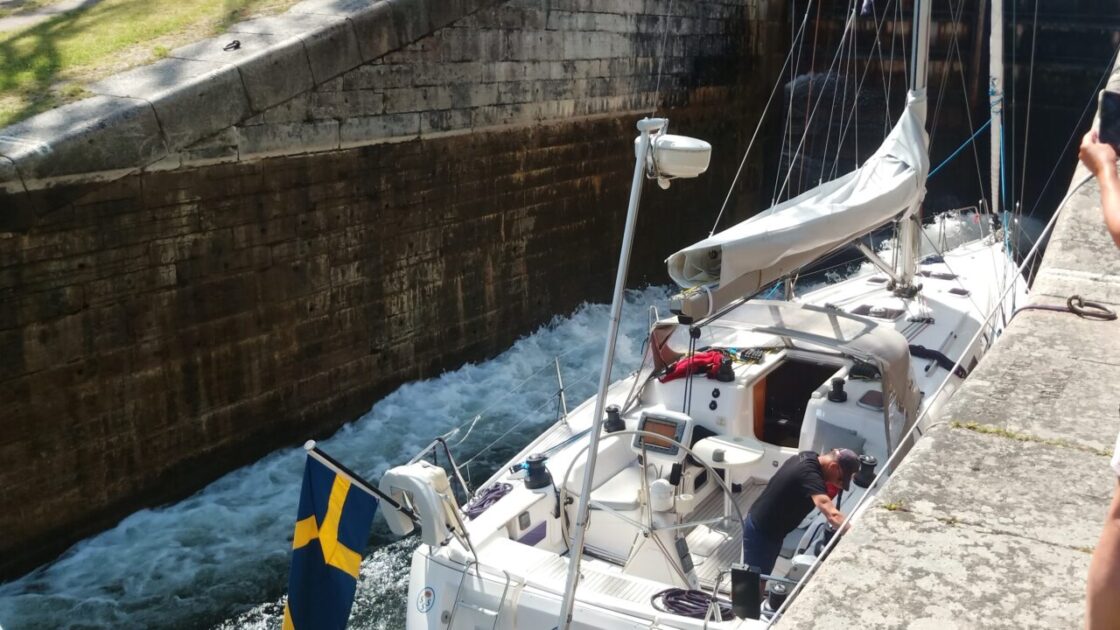
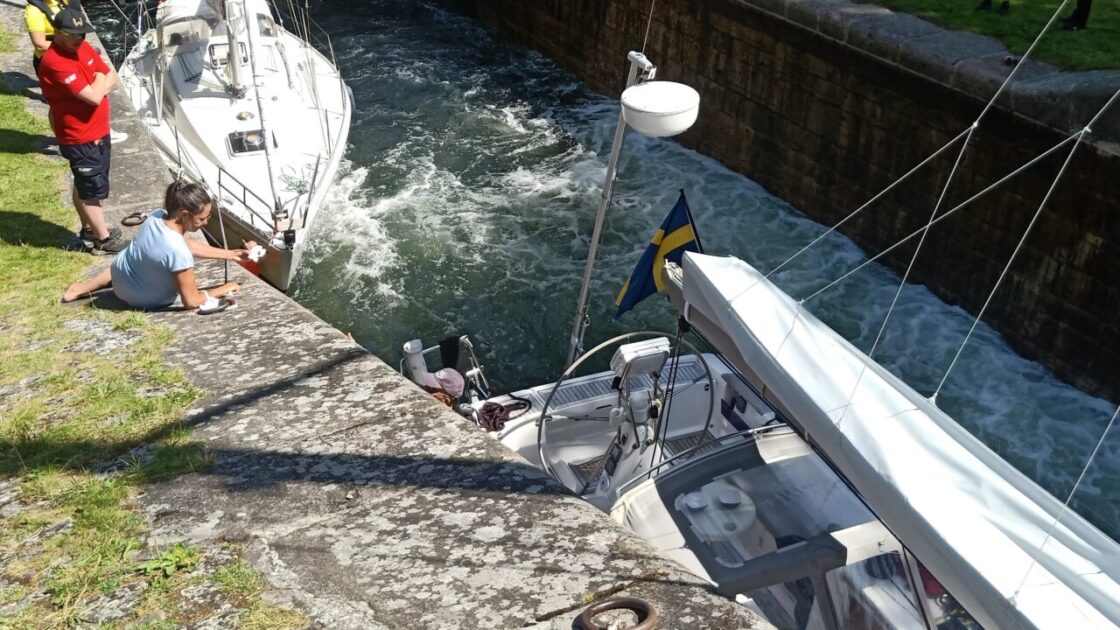
The lines holding the boat in place are shortened as the water rises
Ice-cream time for the bloke on board
Done and dusted - on the way to enjoying the next lake
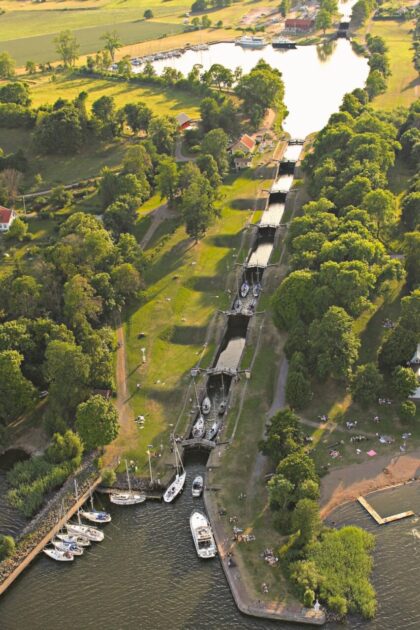
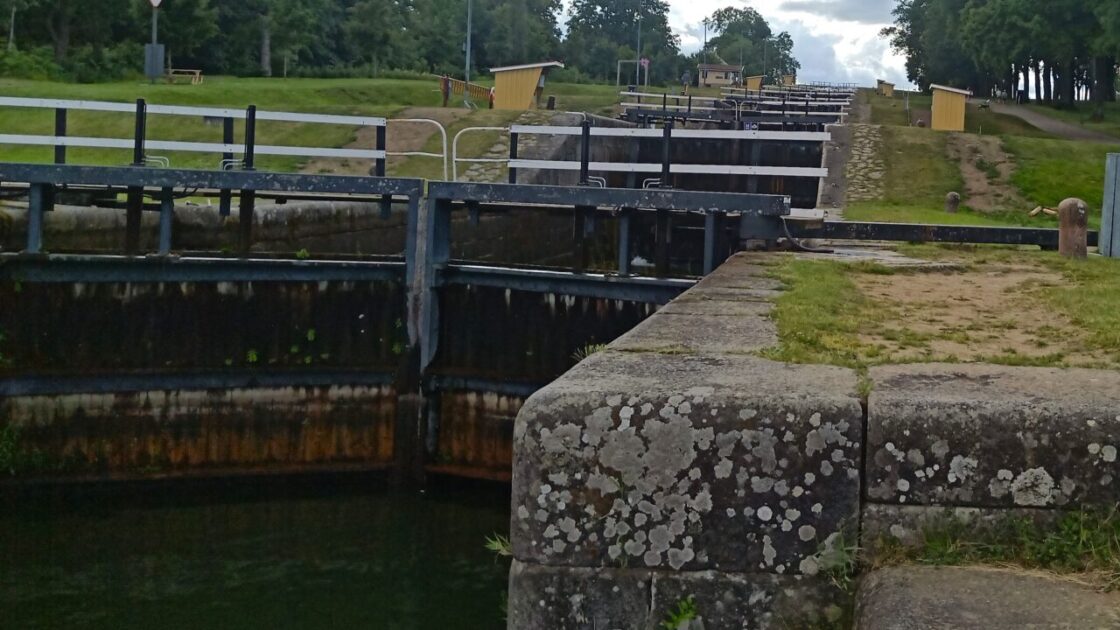
The Borenshult is a series of 5 locks to take the boats up or down 15.3 metres (depending on which way they are travelling)
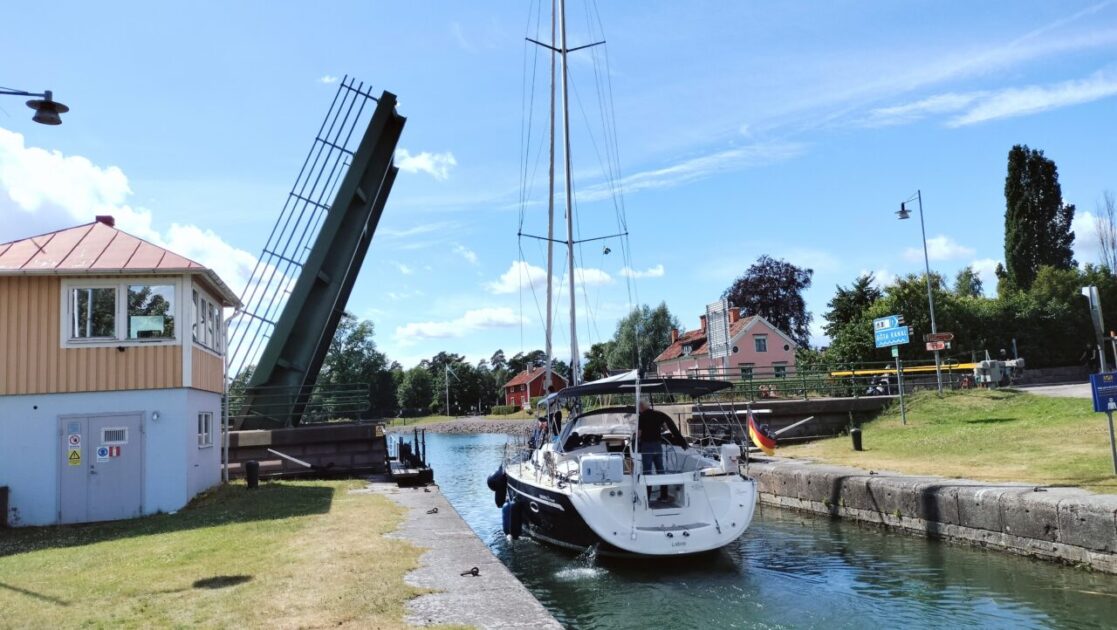
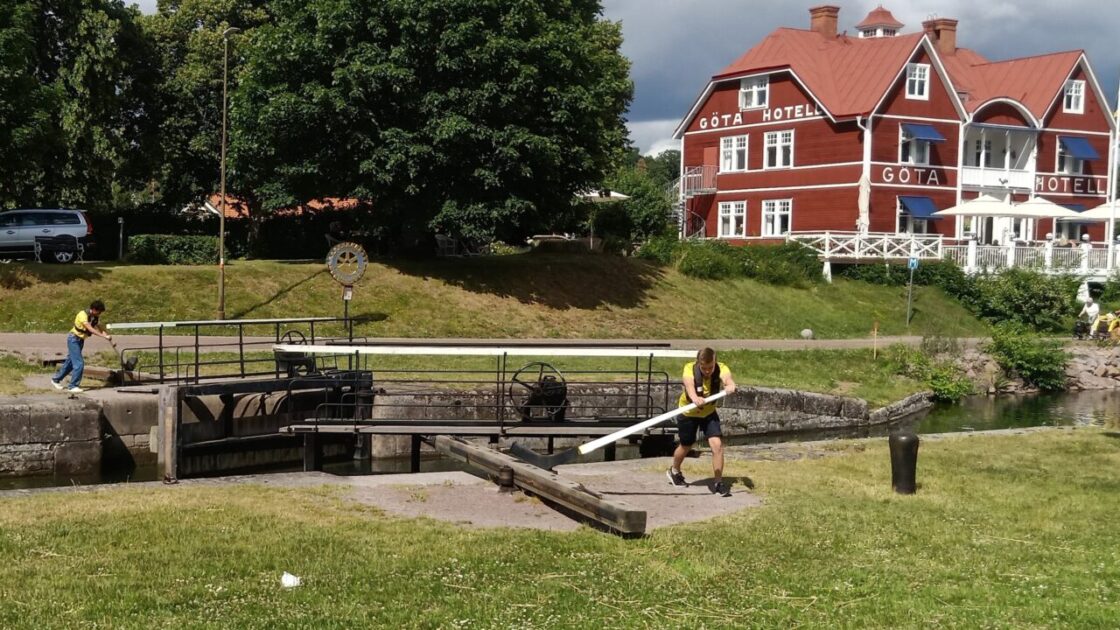
The Borensberg lock only rises 0.2 of a metre but is equally impressive to watch as a large section of the road bridge has to tilt up for the tall sailing ships to pass through and because it is only one of two locks on the canal that is hand-operated.
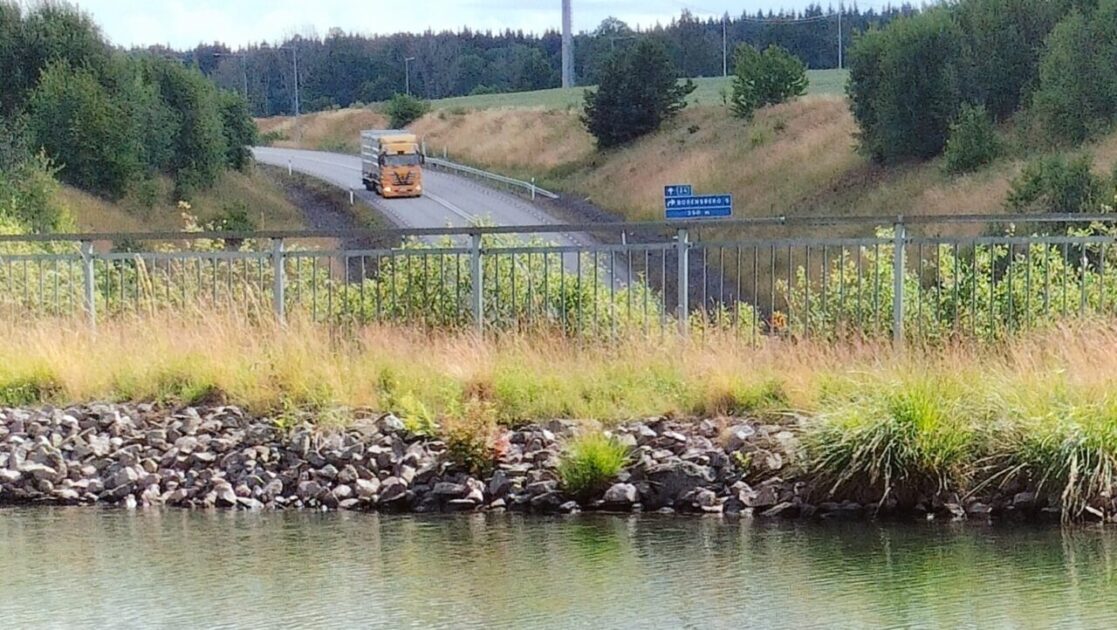
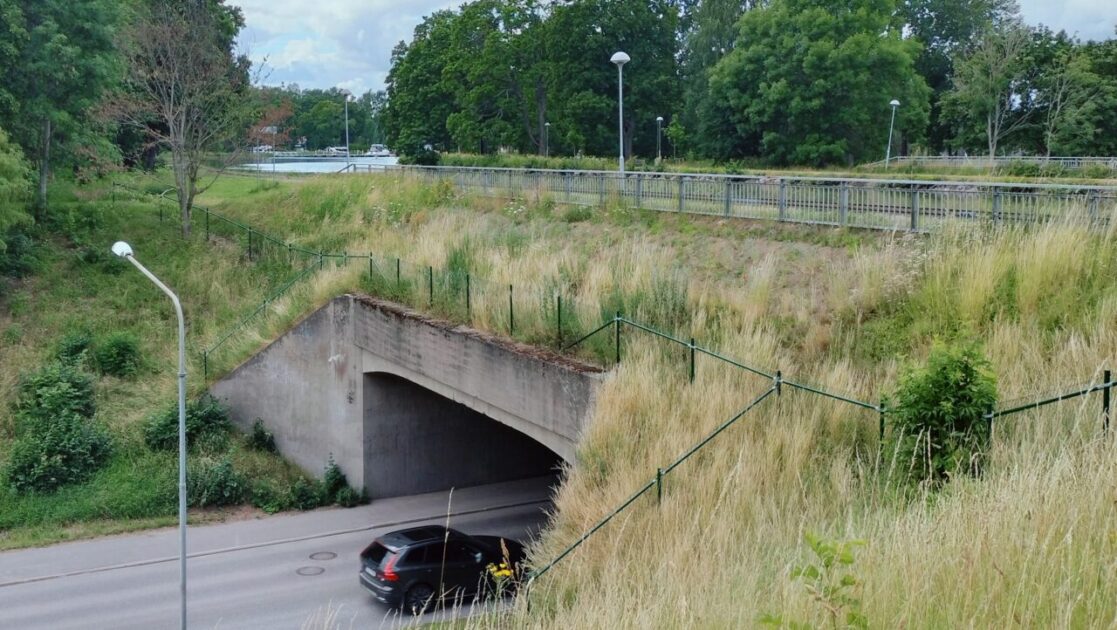
These photos are of two aqueducts, the Kungs Norrby and the Ljungsbro. It is hard to take a photo of the canal going over the motorway and even more frustrating, when just as you get in the car, a boat goes over the motorway on the aqueduct!
Unfortunately we were running out of time to see all the locks and bridges in operation that we wanted to so we skipped straight to the biggest, the Carl Johan, which is a series of 7 locks rising 18.8 metres from Lake Roxen. The crew shut the operation down at 5.00pm as they have to ensure the last boats are through by 6.00pm, to a marina where they can berth for the night. The photos include a borrowed image because you can’t see the enormity of the engineering feat from ground level.
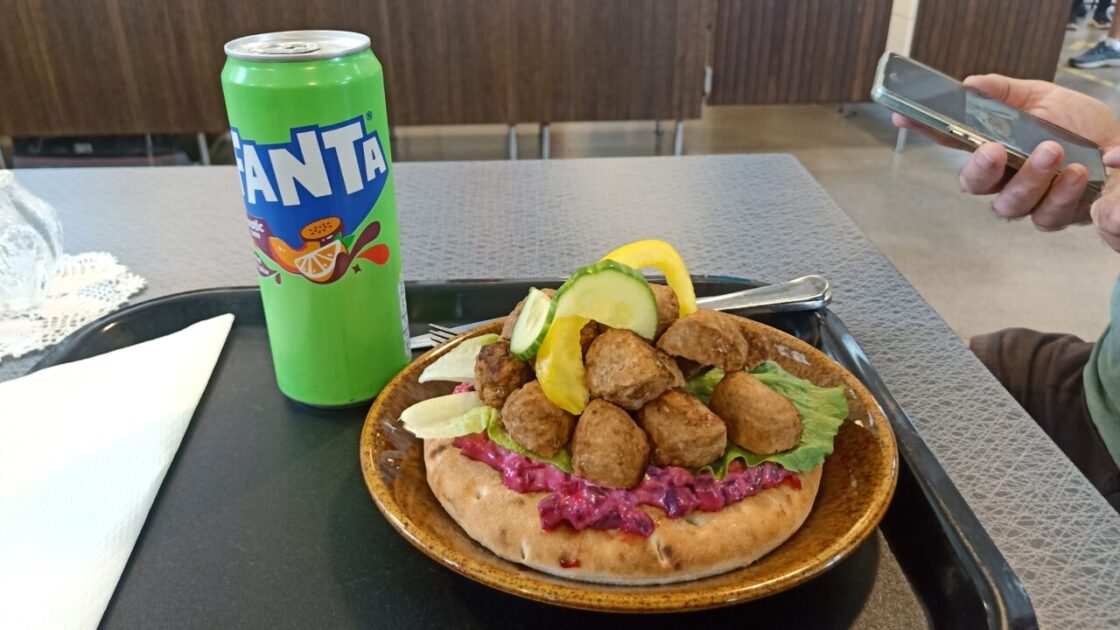
At nearly every lock or bridge there is a café or ice cream vendor, today we dined at the Borensberg Bridge to sample some traditional Swedish cuisine. Sweden is known for their meatballs, anybody who watched the Muppets knows the Swedish chef and his bizarre cooking style and language, today was just as similar. We started at a takeaway place where the guy had no English and he was deaf because his ears were full of technology and then when we found the English speaking place they served meatballs cold. I had a Kottbullesmorgas, an open meatball sandwich with a creamy beetroot salad and Roger had a cheese and ham toasty with a cucumber salad, yum he said. By the way don’t mention the Muppet’s Swedish chef to Swedes, they don’t find him funny.
The Gota Canal has 95kms of towpaths for walkers and cyclists to follow the canal and has places for campervans to park up at the canal’s edge for the night. Not too dissimilar to the canal systems we have seen in France, the UK, and the rest of Europe. From 2005 when we first started following canals in Europe we noted that a lot of the locks weren’t automated or operated by the lock-keepers. Mere male stayed in the boat while the woman climbed out, tied up the boat, manually locked the rear gate, then manually opened the forward gate, untied the ropes and hopped back in. Hence the reason the canals are known as the divorce-ditch. Although the locks are now automated it still appears to be the woman getting out and managing the ropes and in the case of the lady in the photo, she even went off and bought him an ice cream while waiting for the lock to fill.
Today’s ABBA tribute is ‘Cassandra” (1984), for those women who one day should just take the wheel and sail off.
I watched the ship leaving harbour at sunrise Sails almost slack in the cool morning rain She stood on deck, just a tiny figure Rigid and restrained, blue eyes filled with pain