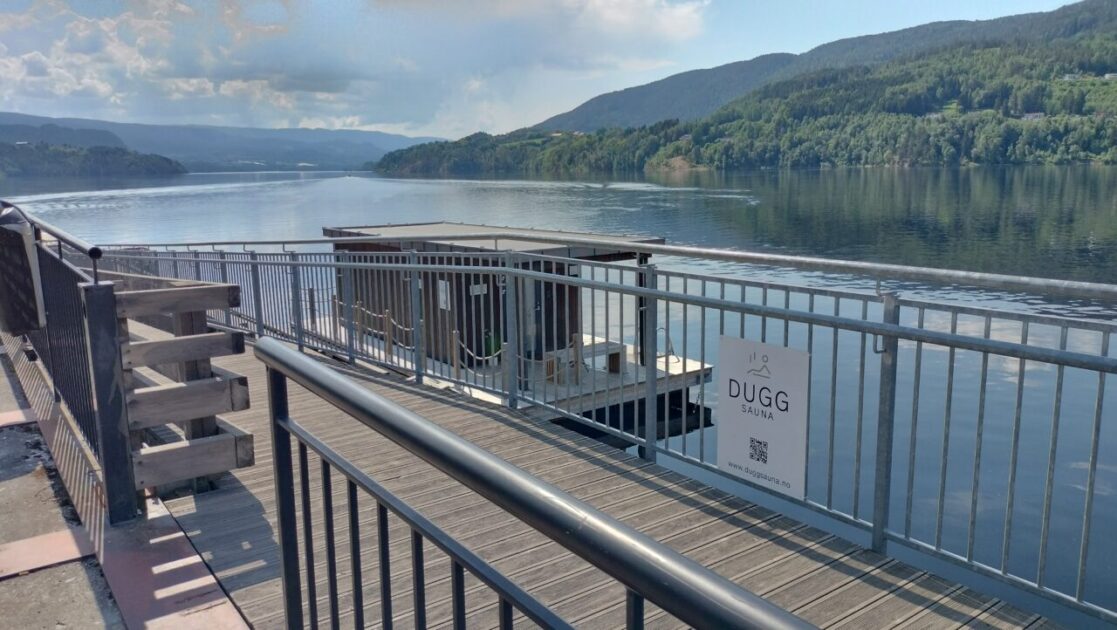
Sauna room moored at water's edge, ready for the next snowfall
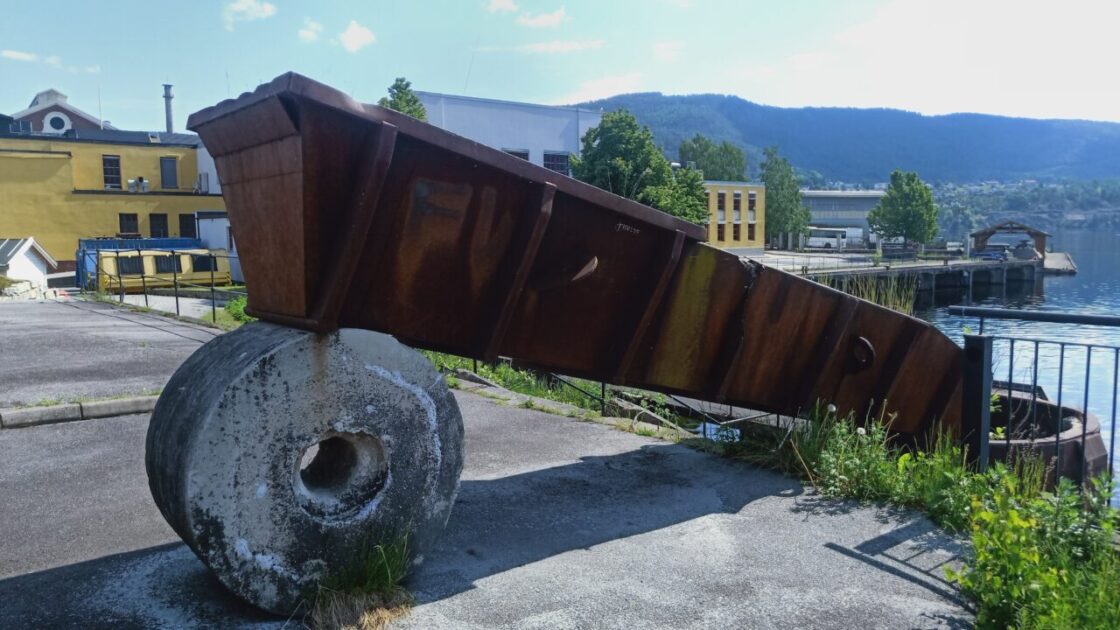
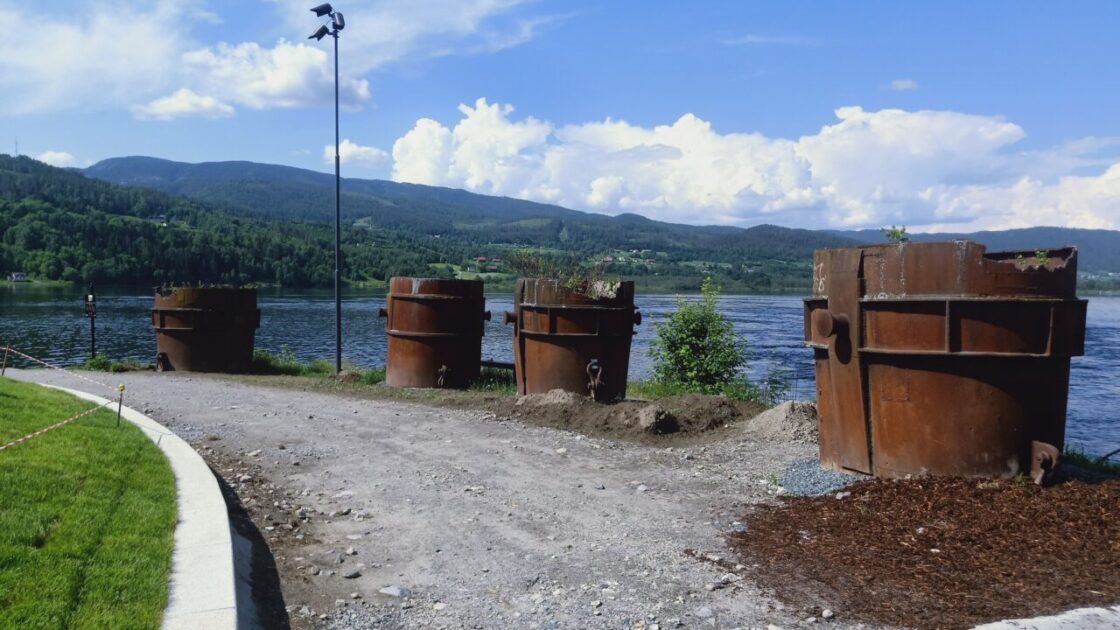
Relics of the old smelter that was here in days gone by
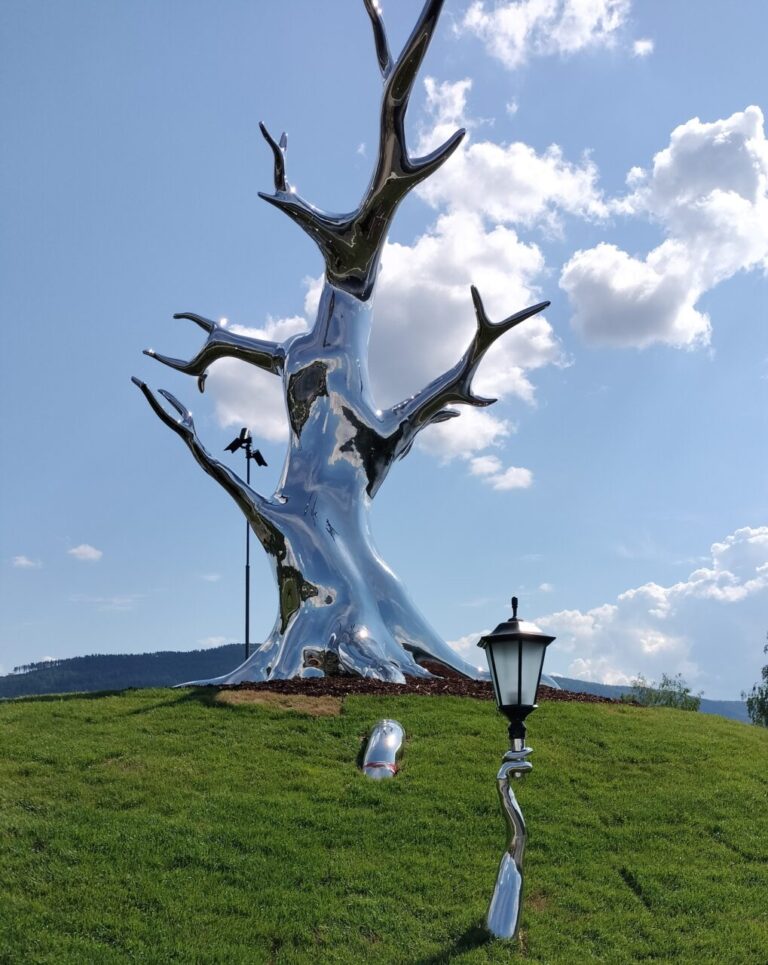
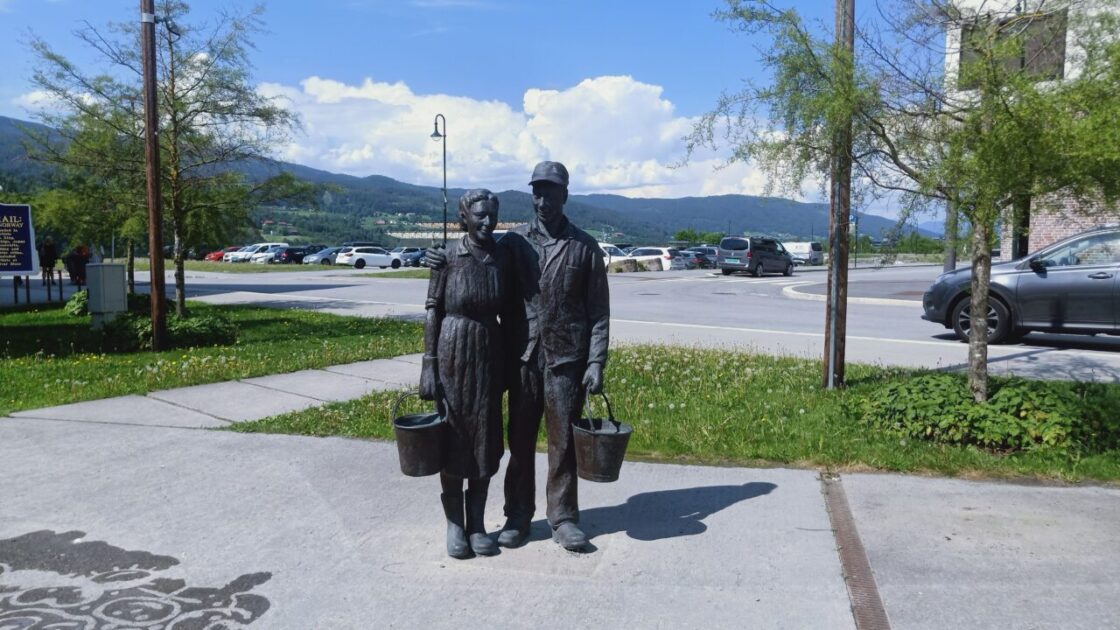
Before leaving Notodden we went down to the river port to see the history of the city which is based around hydro electricity, nitrogen dioxide production for fertiliser and a distribution port for surrounding industry. The photos are of the sculptures and relics of the past. The odd couple with the buckets is a more modern event in the city which is a Blues festival held each year. There is even a sauna room by the river’s edge for those mid-winter acts of stupidity of diving into the icy water.
You can travel a long way quickly in Norway driving through mountains, forests, and valleys because if there are any obstacles Norwegians either build a tunnel or a bridge to shorten the journey. The only drawback is that normally there is no alternate route so you are subject to tolls and speed cameras. The Norwegian policy is to toll new tunnels or bridges only until they have been paid off.
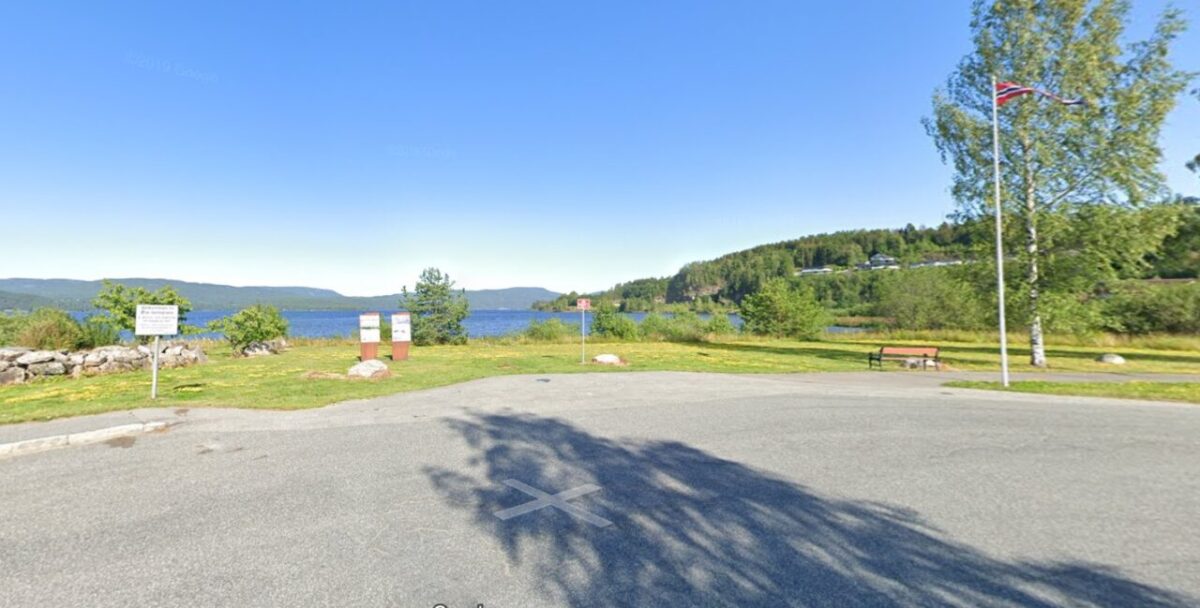
We stopped for our lunch break at Ulefoss – no bakery unfortunately, but they do have a picnic spot with a geocache, views of the lake, and on an information board was the history of the town, the Telemark Canals and hydro power in the area. We sat with all the motor-homers and made our lunch from slim pickings out of the chilly bag.
Fact: 98% of Norway’s power comes from hydro electricity.
We were chased off by lightning and thunder, in the distance, and a few drops of rain. A common weather experience in Norway is threatening storms in the mountains and then you drive out to the coast and it’s 25 degrees and sunny. The Government obviously doesn’t trust you to alter your speed to suit the driving conditions, so the normally 80kph speed limit will drop to 60kmph for a corner, 70kph for a downhill and 40kph if there is a house nearby, whose owner regularly writes to the government about traffic. The constantly changing speed limit makes it very hard to use cruise control.
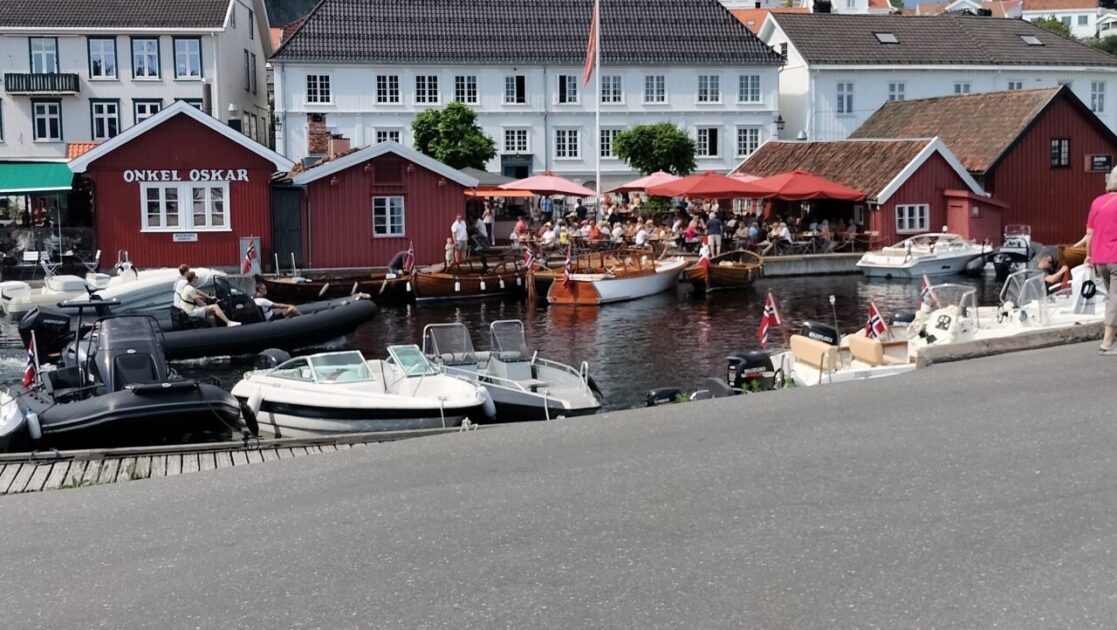
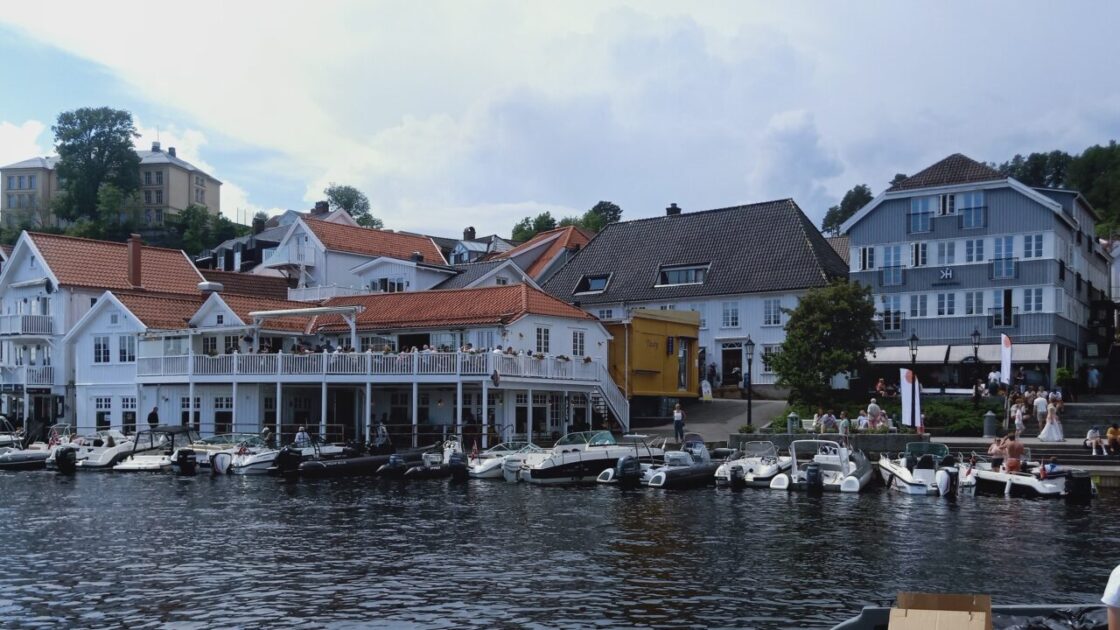
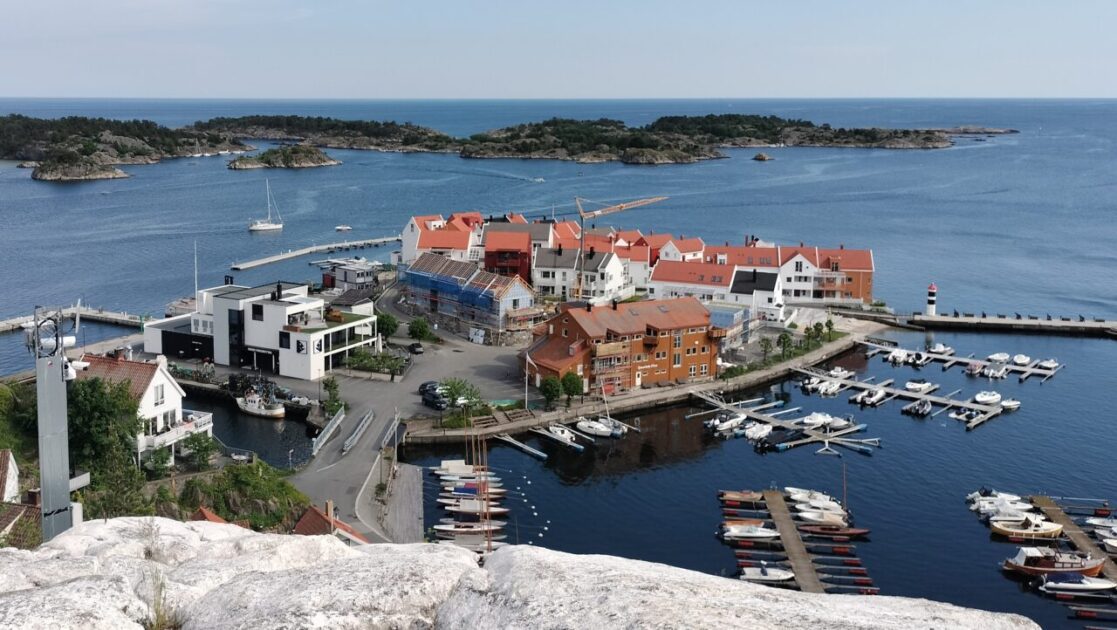
Our next stop was Kragero, 12kms off the main road. Bathed in sun it really is the Riviera of Norway; people come from the surrounding bays in their pleasure craft, pull up to the wharf like parking a car and then attend one of the many restaurants or bars. We walked from the large church to the wharf, over to a neighbouring island, where we found a geocache and some secluded beaches, then traipsed back to town for a poor man’s snack.
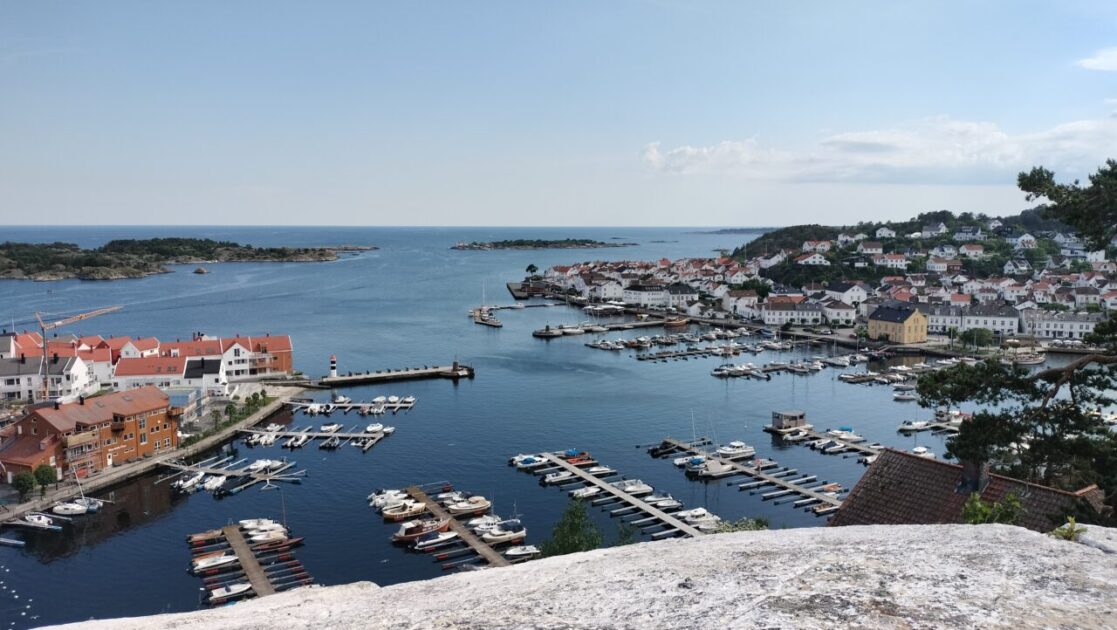
Back on the main road and it’s raining again. We took a turn-off to Risor, another harbour resort, and of course there is no rain, just warm beach weather. Risor is known for its white rocks on the hill, which is why we went there of course; to climb a hill and find a geocache. The locals were commissioned to paint the rocks white as a navigational aid many centuries ago and for their efforts could collect a port tax. Since then the tradition of painting them white has continued. Although not as popular as Kragero, there are still many pleasure craft, and tourists popping in to get their alcohol from the Government shop before it closes.
Last and final stop is Arendal for the night. Today we stopped for petrol even though the tank wasn’t empty. In Denmark the average price per litre was $3.55, and Sweden NZ$2.85, so we stocked up, however in Southern Norway, away from the big cities, petrol is cheaper. Today we paid NZ$3.02 and then discovered we could get it for NZ$2.92 in Arendal. Why is fuel so expensive in Norway? Some of the reasons offered by various discussion groups…
Norway drills for oil but sells it overseas to fund the country and maintain happy economic relations with Europe; drug dealing-101 don’t use what you intend to sell
The government loads the fuel price up with taxes to fund the welfare system
The big cities want you out of your car and into public transport
The government wants you to buy their electricity and drive an environmentally friendly EV. Supposedly electric cars get free tolls, free car parks and can drive in the bus lane. They also speed past cars with German number plates. I hope they aren’t speed ticket free
The country has high wage costs and profits need to be made to cover the wages
People have greater purchasing power and can afford the cost, so accepting the price
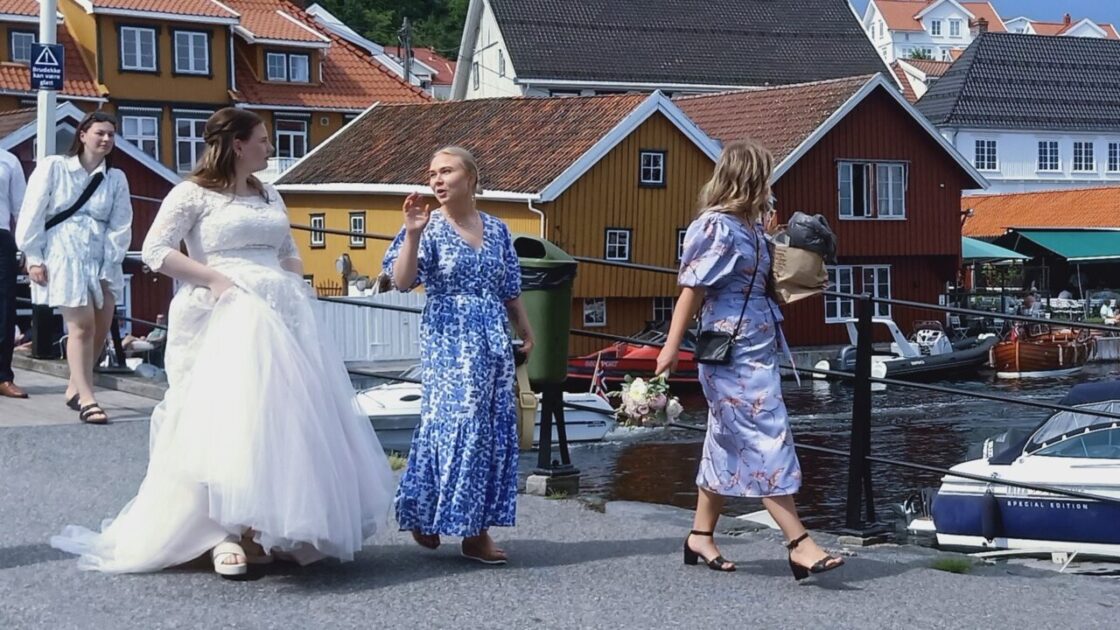
Today’s ABBA tribute is ‘I Do, I Do, I Do’ (1975) for the bride that got married at Kragero today.
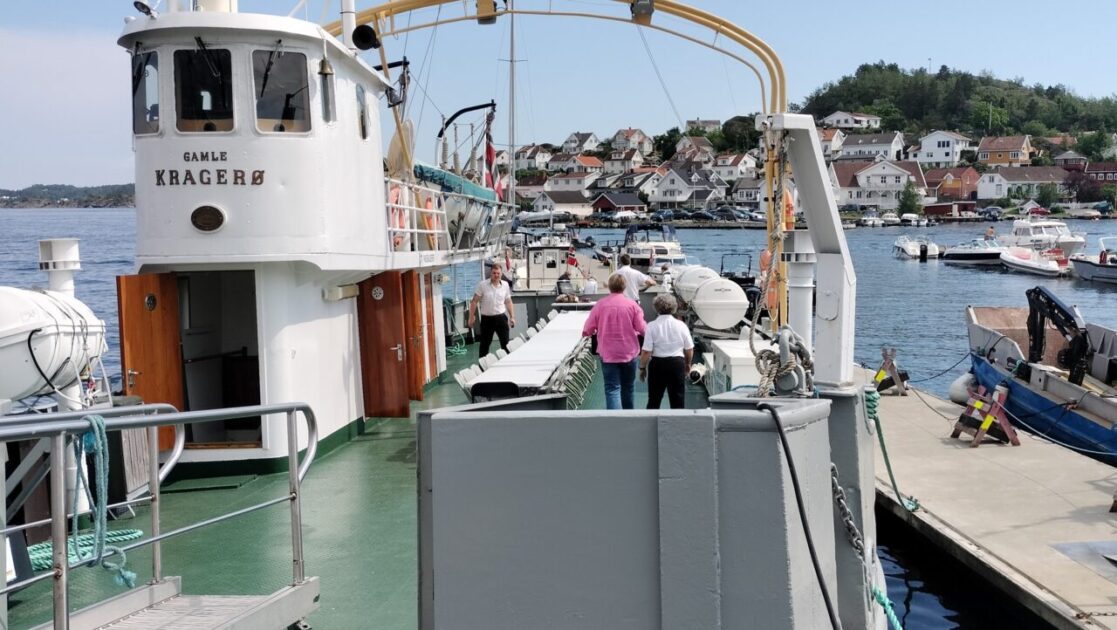
We caught a glimpse of her arriving on the wharf and also grabbed a photo of the wedding table on the boat. She will however be early as nothing was laid out and the wait staff were frantically unloading the chilly bins of seafood and platters.