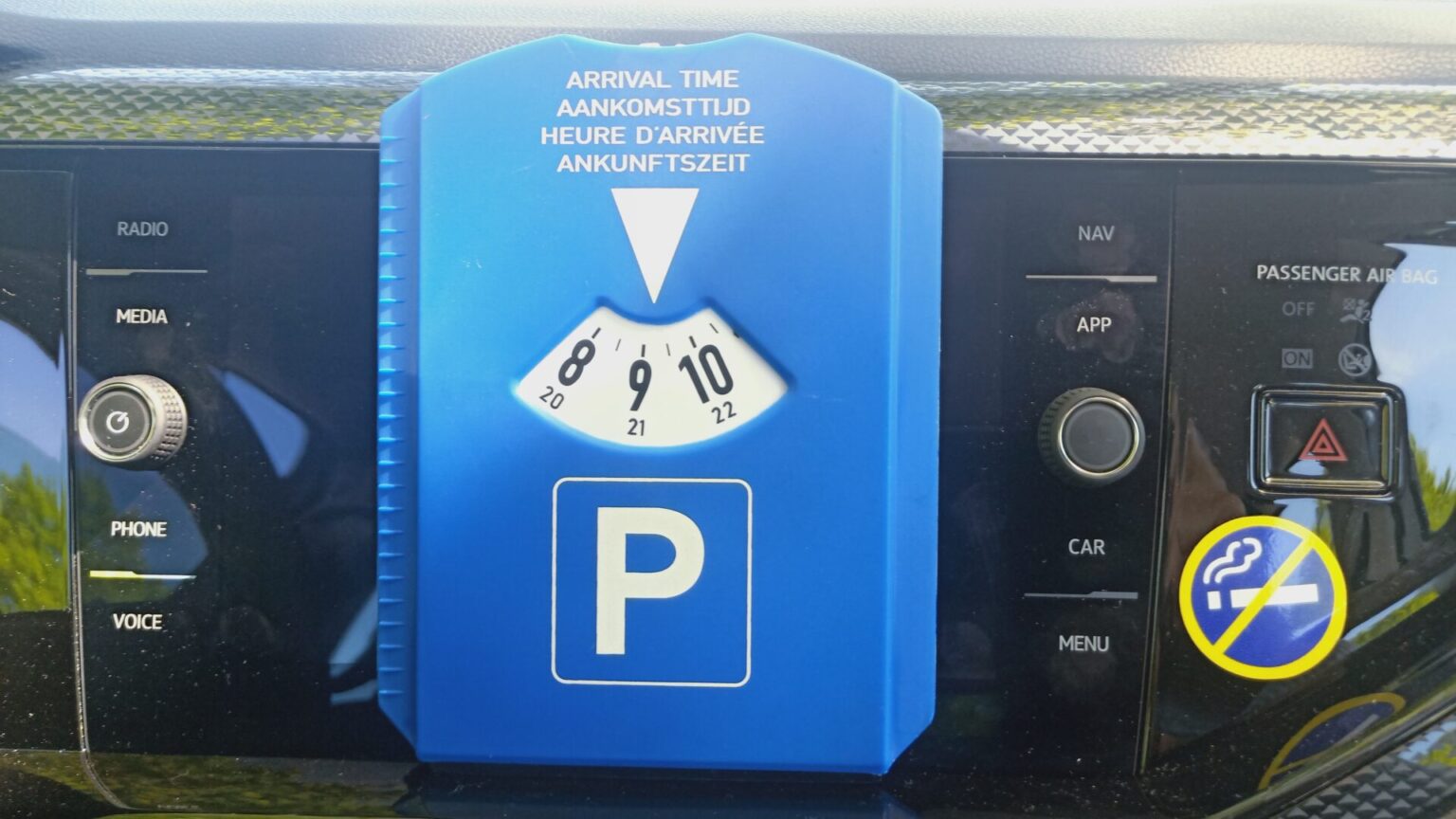
Today’s lesson is parking in Denmark especially in the bigger cities. Parking buildings are expensive and parking fines are extortionate. We went to a small supermarket in the city that allowed 2 hours free parking; however you had to have a parking disc. After a bit of research we found the annoying plastic thing that rattled in the car door pocket is our disc (see photo above). You pull into a carpark, set the indicator to when you parked and place it on the dashboard so that the parking warden knows when to sting you. Even the laybys on the man road have a parking time limit.
If you use a parking building you can elect to buy a set period or you can start a timer and stop it later using a phone app. Don’t try and cheat the system because they have number-plate recognition cameras on the entry and exits.
Further facts: 9/10 Danes own a bike, 4/10 Danes own a car, 32% of shoppers come by bike to the supermarket, because it is more user friendly, which is great for us because there are more parks.
UNESCO Site - Jelling Monuments
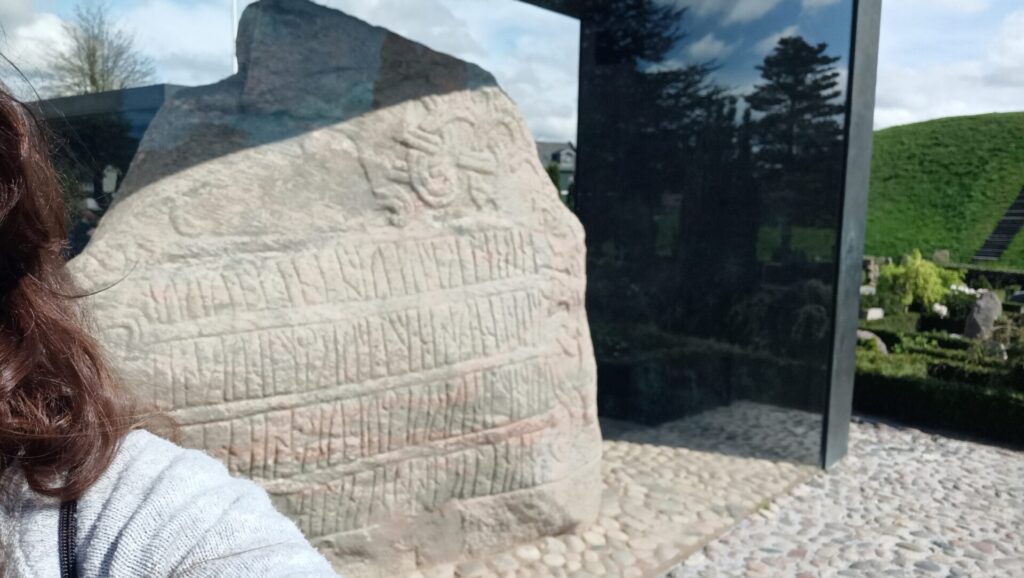
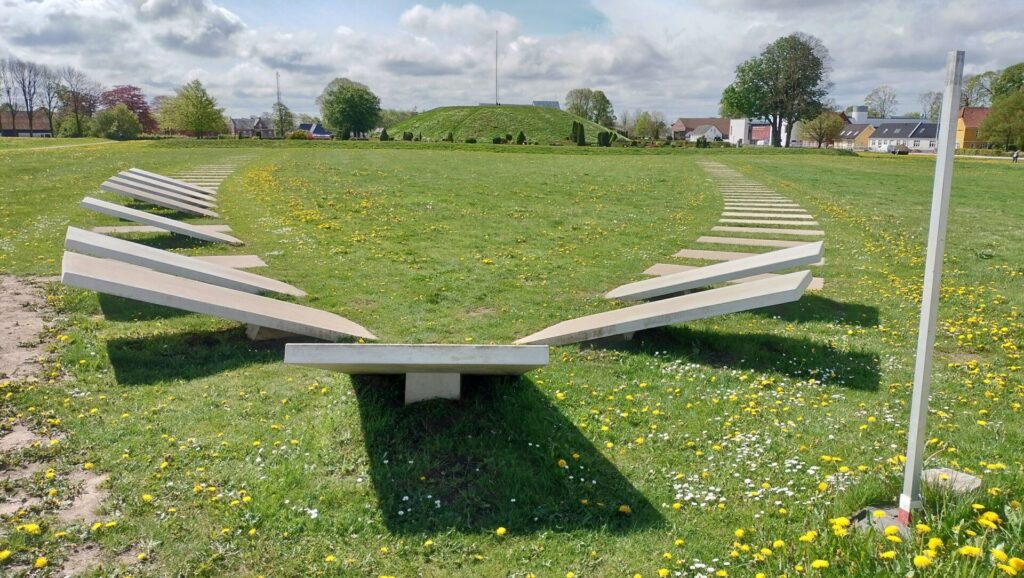
On the way to our next accommodation in the University City of Aarhus we stopped at Jelling. Jelling has a UNESCO Monument area that was once home to the Viking Kings of the 900’s. From ground level you can see two burial mounds and under that are the remains of a very large stone Viking ship. Although the remains aren’t visible the outline has been marked with concrete slabs; the size and location has been determined by archeological excavation. There is also a museum, Viking church, Rune Stones (the Viking way of writing their memoirs down onto a big rock) and a couple of footprint bases where long houses once were.
The significance of this particular Viking area is that it was once home to King Harald Bluetooth, he wrote the family Rune Stones and buried his father here. Yes, Bluetooth technology is named after him and the company uses his iconic rune stone logo; I imagine no copyright was paid to Harald. No, Harald Bluetooth didn’t invent Bluetooth technology but he did go down in the history books for creating many other famous landmarks in Denmark and fighting a few battles.
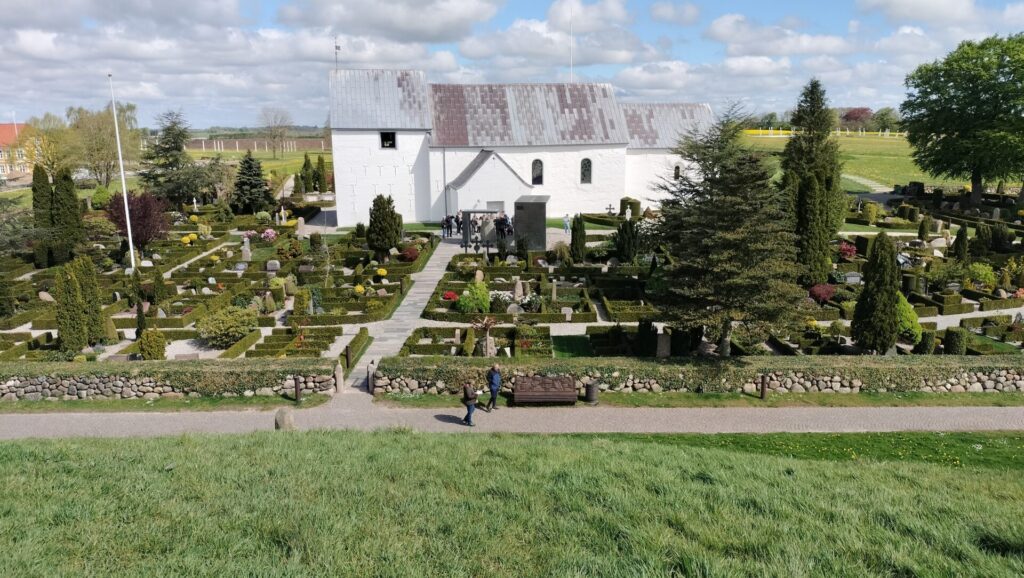
The Romanesque stone church, built in 1100AD on the site of Harald's church, built in the 900s
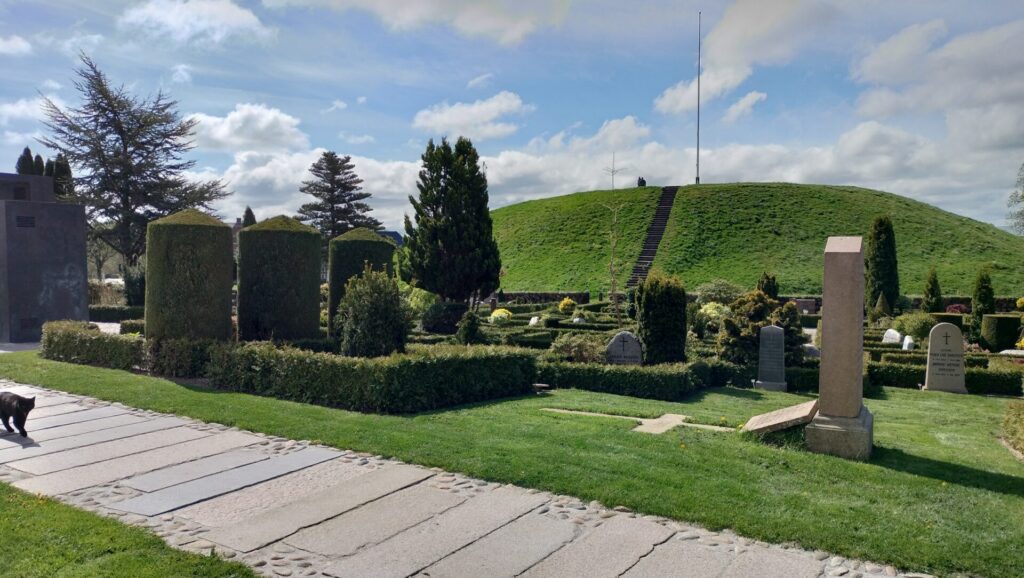
One of the two burial mounds adjacent to the site of Harald's old church (now the site of the current church)
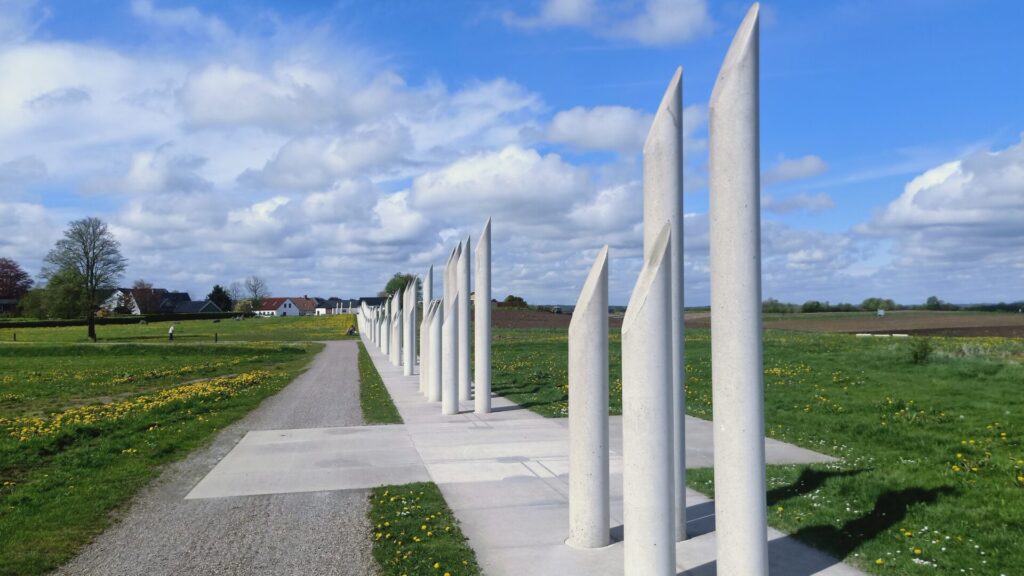
The area was once fenced off with a wooden Palisade (high fortress fence) to protect the King and his people. The Palisade has long gone and is now replaced by white concrete pillars marking the perimeter. One year the pillars appeared adorned with gnome hats after five women covered half of them in the night. A Gnome Intelligence Service was set up to discover who did it, since then the event has become a tradition every December. There were no hats today, just a geocache, hundreds of children and a black cat.
Representing the original wooden pallisade ...
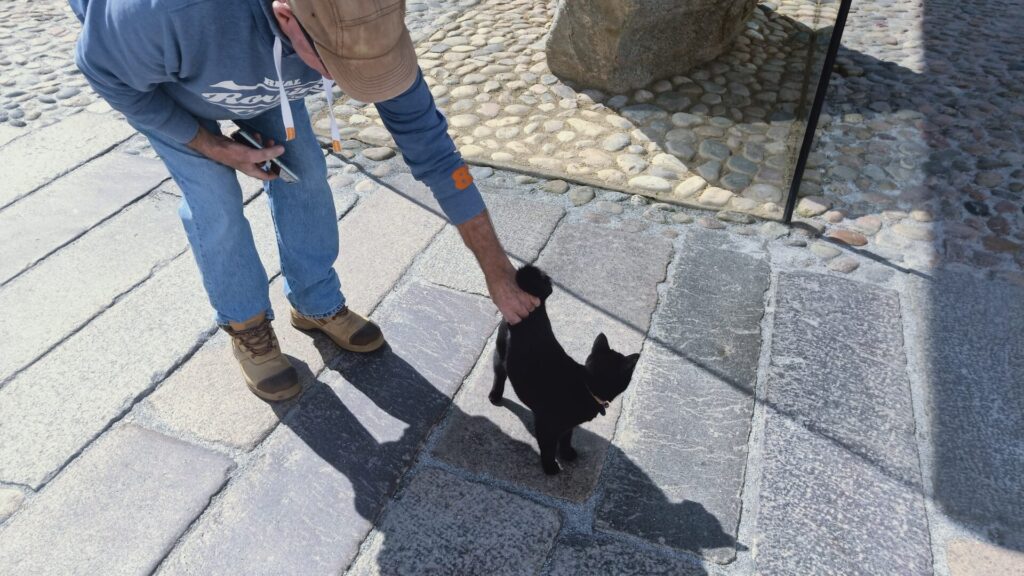
A custodian of the site has presented herself for a back-scratch. She will have been born in the time of modern-day Bluetooth
In the 900s, King Harald Bluetooth had Denmark's baptismal certificate chiseled on a runestone in Jelling and built two burial mounds and a church on the site.
Harald made a stone boat (for burials) and it's size when built is signified by the concrete slabs laid out above it
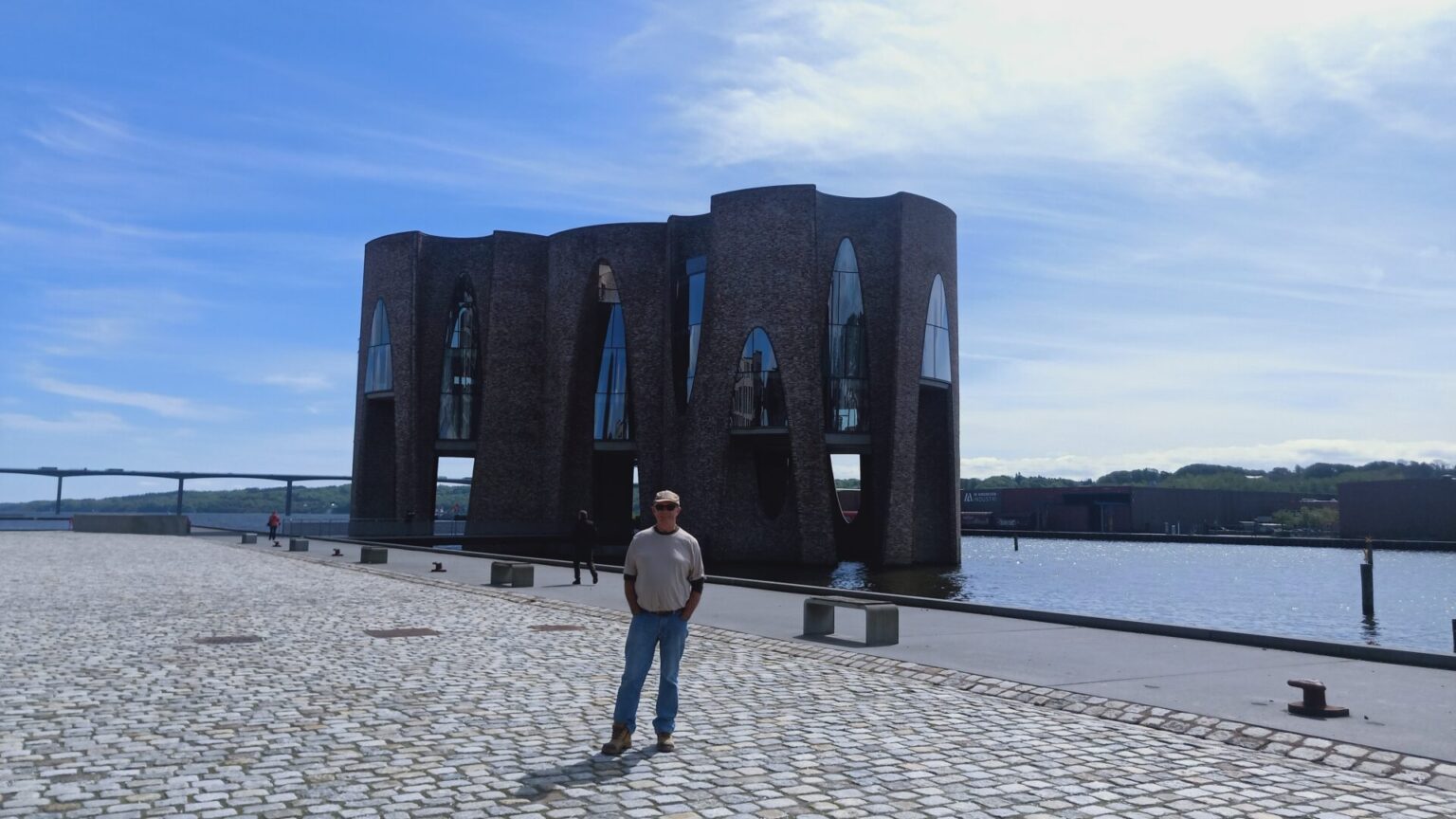
Our next stop was Vejle and its famous Fjordenhus. A lady from the Lego family commissioned the building of this office block/restaurant/art centre on the Fjord. A well known Danish architect and artist designed the structure which is clad in 900,000 bricks of 13 colours unglazed and 3 glazed. The structure and the colour mixture meant that instead of the masons laying 800 -1000 bricks per day they could only manage 100 – 200 per day. The public, that’s us geocachers, can visit the ground floor artworks for free.
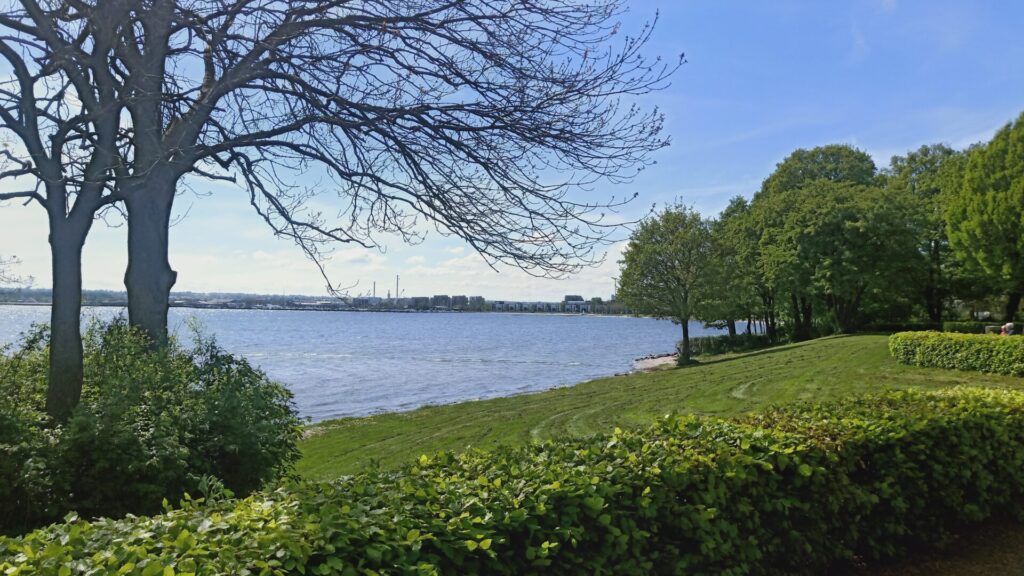
Lunch stop today was at a green space on the shores of the Horsens Fjord, the wind was so cold we had to have our extra strength cheese sandwiches in the car.
In Denmark cheese packets have strength indicators on them; the upper strength of 4/5 was pushing my senses to “is this past its best by date”.
We did our first big supermarket shop today as we are here for three nights. The whole experience is made better by customers having to leave prams and pushchairs outside and any other item that may impede other shopper’s experience. Compared to France where the locals either don’t know English or pretend not to, the Danes all know English and are happy to help. A lady helped us determine what the difference was between shelves of bottled water and then checked with the staff where the bottle return machine was for us. The checkout people on hearing you are English speaking become quite conversant, the French would just grunt. It’s a shame about the cold wind and high cost of living as Denmark could be more appealing than France.
Today’s ABBA tribute is for King Harald Bluetooth, the overlooked technology developer; What about Livingstone (1974)
What about all those men? Who have sacrificed their lives to lead the way Tell me, wasn’t it worth the while Putting themselves on test Didn’t that help the rest? Wasn’t it worth it then?